Vietnamese
 English
 Korean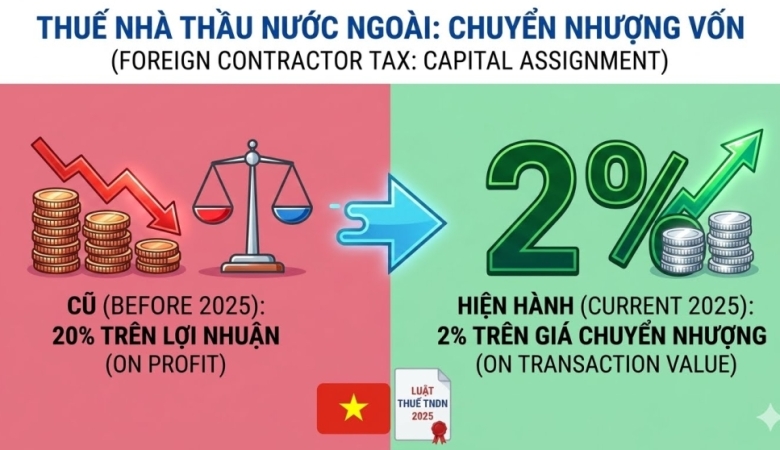
CAPITAL TRANSFER TAXATION: KEY CORPORATE INCOME TAX (CIT) AND PERSONAL INCOME TAX (PIT) CONSIDERATIONS
Capital transfers are common transactions in investment activities, corporate restructuring, and divestment processes. However, the tax implications vary significantly depending on the status of the investor and the type of entity whose capital is being transferred.
The following article summarizes the applicable Corporate Income Tax (CIT) and Personal Income Tax (PIT) regulations on capital transfers under current Vietnamese tax laws.
1. Corporate Investors
1.1. Corporate Investors Established Under Vietnamese Law
Income derived from capital transfers is subject to CIT based on the actual taxable gain generated from the transaction.
Taxable income is determined as follows:
Taxable Income = Transfer Price – Acquisition Cost of the Transferred Capital – Transfer-Related Expenses
Where:
- Transfer Price is the actual selling price stated in the transfer agreement;
- Acquisition Cost is the original value of the capital contribution or the purchase price of the acquired capital;
- Transfer-Related Expenses are reasonable and valid expenses directly associated with the transfer transaction.
CIT payable:
CIT Payable = Taxable Income × 20%
1.2. Foreign Corporate Investors Not Operating Under the Law on Investment or the Law on Enterprises
For foreign organizations transferring capital in a Vietnamese enterprise but not operating under Vietnam’s Law on Investment or Law on Enterprises, CIT is imposed based on a deemed tax rate on the gross transfer value.
CIT payable:
CIT Payable = Transfer Price × 2%
Special Note:
Capital transfer transactions conducted as part of an internal group restructuring may be exempt from CIT if all of the following conditions are satisfied:
- The ultimate parent company of the participating entities remains unchanged;
- The parties continue to maintain direct or indirect ownership in the Vietnamese enterprise after the restructuring; and
- No taxable gain arises from the transaction.
2. Individual Investors
2.1. Transfer of Capital Contributions in a Limited Liability Company (LLC)
Where the Acquisition Cost Can Be Determined
PIT is calculated based on the actual gain derived from the transfer:
PIT Payable = (Transfer Price – Acquisition Cost – Related Expenses) × 20%
Where the Acquisition Cost Cannot Be Determined
If the individual cannot provide sufficient supporting documents to substantiate the acquisition cost or related expenses, PIT is imposed on the gross transfer value.
PIT Payable = Transfer Price × 2%
2.2. Transfer of Shares in a Joint Stock Company (JSC)
For share transfers, PIT is imposed on the gross transfer value of each transaction, regardless of whether the transaction results in a gain or a loss.
PIT Payable = Transfer Price × 0.1%
This tax rate applies to share transfer transactions and securities transfers in accordance with current regulations.
Note: This treatment applies equally to both resident and non-resident individuals.
Summary of Capital Transfer Taxation
| Investor Type | Type of Transfer | Tax Calculation Method |
|---|---|---|
| Vietnamese Corporate Investor | Capital transfer | (Transfer Price – Acquisition Cost – Expenses) × 20% |
| Foreign Corporate Investor not operating under the Law on Investment or Law on Enterprises | Transfer of capital in a Vietnamese enterprise | Transfer Price × 2% |
| Individual transferring capital in an LLC (acquisition cost determinable) | Transfer of capital contribution | (Transfer Price – Acquisition Cost – Expenses) × 20% |
| Individual transferring capital in an LLC (acquisition cost not determinable) | Transfer of capital contribution | Transfer Price × 2% |
| Individual transferring shares in a JSC | Share transfer | Transfer Price × 0.1% |
Conclusion
Proper identification of the investor type, the nature of the transferred interest, and the applicable tax calculation method is essential for ensuring compliance and minimizing potential tax risks. Prior to undertaking a capital transfer transaction, investors and enterprises should review all relevant legal documentation, capital contribution records, and supporting evidence of related expenses to determine the most appropriate tax treatment.