Vietnamese
 English
 Korean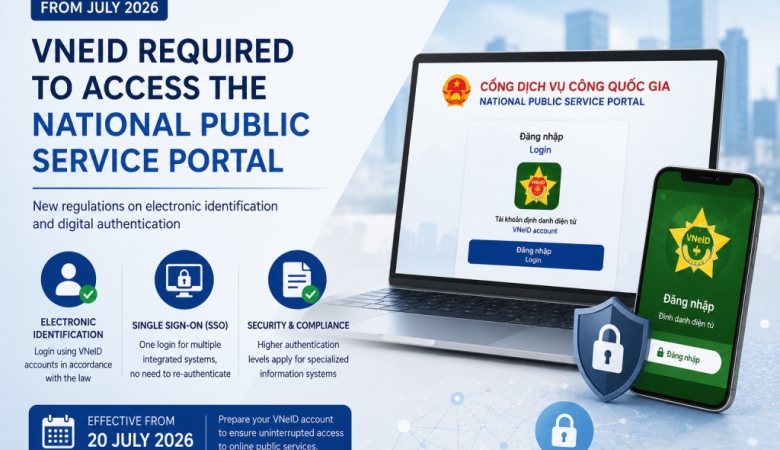
From July 2026: Access to the National Public Service Portal Will Require an Electronic Identification (VNeID) Account – What Businesses Need to Know
As part of Vietnam's digital transformation agenda, the Government has introduced new regulations requiring the use of electronic identification (VNeID) accounts to access online public services.
Under the new implementation roadmap, organizations and individuals will use their electronic identification accounts to log in to the National Public Service Portal beginning in July 2026. Businesses and taxpayers should proactively prepare for this transition to ensure uninterrupted access to public administrative services and electronic tax transactions.
Legal Basis
The implementation of electronic identification accounts is governed by the following legal documents:
- Decree No. 224/2026/ND-CP, effective from 1 July 2026, detailing the implementation of the 2025 Law on Digital Transformation. The Decree aims to standardize the delivery of public services on digital platforms, shifting from a citizen-initiated declaration model to a proactive public service model.
- Decree No. 69/2024/ND-CP, which establishes the roadmap for transitioning from traditional Public Service Portal accounts to electronic identification (VNeID) accounts.
- Decision No. 29/2026/QD-TTg, issued by the Prime Minister and effective from 20 July 2026, promulgating the Regulation on the Management, Operation, and Utilization of the National Public Service Portal.
New Login Requirements for the National Public Service Portal
Pursuant to Article 10 of Decision No. 29/2026/QD-TTg:
- Organizations and individuals must log in to the National Public Service Portal using their electronic identification (VNeID) accounts in accordance with applicable laws.
- The Portal applies a Single Sign-On (SSO) mechanism, allowing users to authenticate once and seamlessly access connected administrative information systems without repeated logins.
- Where a specialized information system requires a higher level of authentication under sector-specific regulations, users must complete the additional authentication procedures required by that system.
Accordingly, electronic identification accounts will become the official authentication method for accessing the National Public Service Portal under the Government's digital transformation roadmap.
Impact on Taxpayers
The transition to electronic identification accounts will have a direct impact on businesses and individuals conducting electronic tax transactions.
As the tax administration systems become integrated with the National Public Service Portal, taxpayers will be required to use their electronic identification accounts when accessing online tax services. Failure to register or activate an electronic identification account may affect the ability to submit tax returns, file electronic documents, or perform other online tax procedures through the integrated system.
Businesses are therefore encouraged to complete the transition well in advance of the mandatory implementation date.
Have Tax Authorities Required Electronic Identification Before 1 July 2026?
At present, there has been no nationwide announcement requiring all taxpayers to complete electronic identification before 1 July 2026.
However, certain local tax authorities have already begun implementing the transition. For example, Tax Sub-department No. 1 of Phu Tho Province has issued an official notice encouraging taxpayers to complete their electronic identification registration before 30 June 2026 to avoid delays in filing tax returns during the system transition.
Although similar notices have not yet been issued nationwide, the adoption of electronic identification accounts is expected to be implemented uniformly across Vietnam in the near future.
Recommendations for Businesses
To ensure uninterrupted access to online public services and electronic tax administration, businesses should:
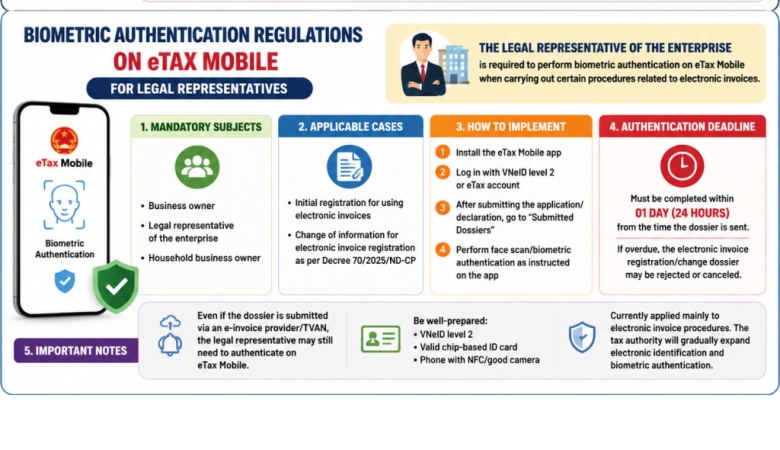
- Register and activate an electronic identification (VNeID) account for the legal representative or the authorized individual responsible for conducting electronic transactions.
- Verify that the account can successfully access the National Public Service Portal before the new requirements take effect.
- Review internal procedures for handling administrative and tax compliance matters to ensure compatibility with the new authentication method.
- Closely monitor official announcements from the tax authorities and other competent government agencies regarding implementation timelines and technical guidance.
Notes
The mandatory use of electronic identification (VNeID) accounts represents another significant milestone in Vietnam's digital government initiative and the modernization of public administrative services.
Although the transition is being implemented according to a phased roadmap, businesses should not wait until the mandatory deadline to prepare. Early adoption will help minimize the risk of service disruptions, ensure continuous access to electronic tax services, and facilitate compliance with Vietnam's evolving digital administration framework.